
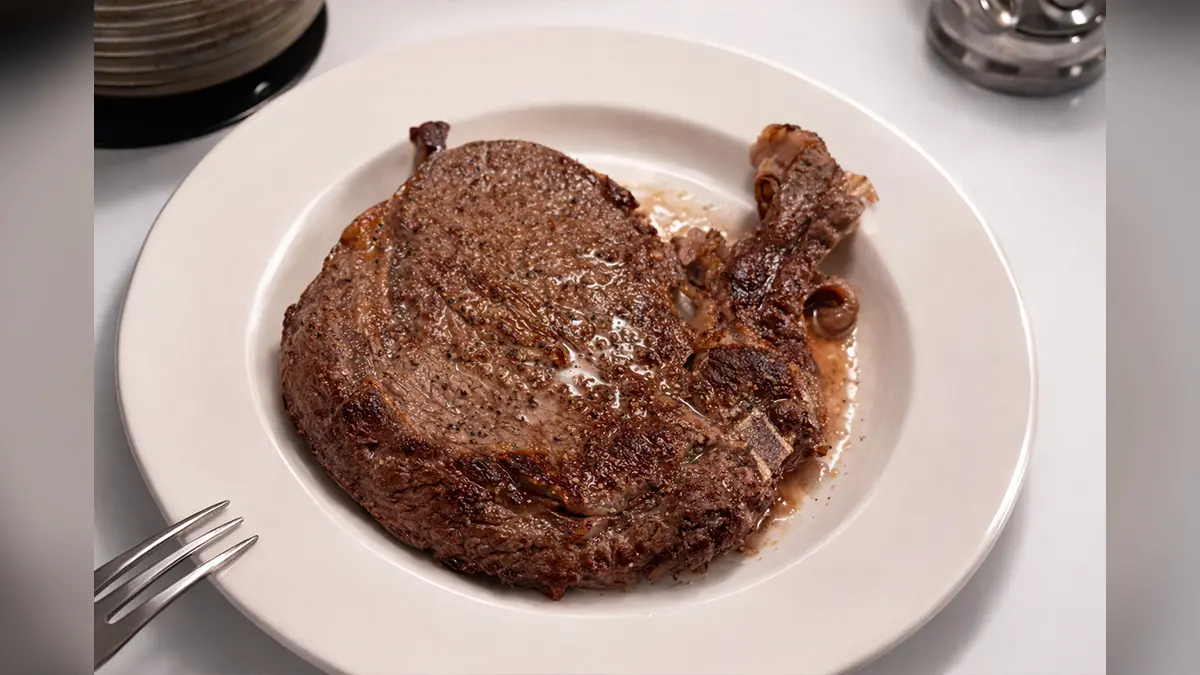
Bone-In Ribeye in a Small Cast Iron Skillet
Controlled heat, real flavor, and no panic
Some nights you don’t have the perfect pan. You don’t dry the steak like you meant to. You remember the butter late. And yet, it still turns out great.
This is a forgiving, no-nonsense way to cook a ¾-inch bone-in ribeye in an 8-inch cast iron skillet, with notes on what actually matters and what doesn’t.
Why This Works
- Ribeye has enough fat to forgive small mistakes
- Short, aggressive heat builds flavor fast
- Rendering the fat cap early makes a big difference
- Butter at the end adds aroma without overcooking
This method embraces controlled intensity, not perfection.
Ingredients
- 1 bone-in ribeye steak (about ¾-inch thick)
- Kosher salt
- Fresh cracked black pepper
- Neutral oil (avocado or vegetable)
- 1 tablespoon butter
- Optional: garlic clove or fresh herbs (thyme, rosemary)
Equipment
- 8-inch cast iron skillet
- Tongs
- Spoon
- Plate for resting
Instructions
1. Bring the steak to room temperature
Let the ribeye sit out for 20–30 minutes.
This helps it cook more evenly, especially near the bone.
2. Preheat the skillet
Place the cast iron over medium-high to high heat.
Heat until very hot — oil shimmering, just shy of heavy smoke.
(Add oil once hot if you remember. If not, it’ll still work.)
3. Render the fat cap
Hold the steak upright with tongs and press the fat edge into the pan.
- 30–45 seconds
- You’re looking for browning and softening
- The pan should gain a little extra rendered fat
This step adds flavor and improves the final crust.
4. Sear the steak
Lay the steak flat.
- Sear 60 seconds
- Flip once
- Sear another 60 seconds
Press gently to ensure contact, especially near the bone.
5. Butter finish (late is fine)
Lower heat slightly.
Add butter to the pan after the steak is mostly done if needed — this avoids burning and overcooking.
- Spoon butter over the steak for 15–30 seconds
- Optional: add garlic or herbs here
6. Rest
Transfer to a plate.
- Rest 3–5 minutes
- Do not tightly tent with foil (steam kills crust)
What to Expect
- Center: medium to medium-rare
- Near the bone: darker red, slightly rarer
- Fat cap: softened and flavorful
- Crust: savory, not blackened
A bone-in ribeye naturally cooks in gradients — that’s part of the charm.
Pan Juices (Don’t Waste Them)
After pulling the steak:
- Add a teaspoon of water or broth
- Scrape the pan
- Spoon over sliced steak
Or save the butter and drippings for eggs, potatoes, or toast the next day.
Notes from the Cook
- Forgot to dry the steak? You’ll lose a little crust, not flavor.
- Forgot butter until the end? Totally fine.
- Small pan? Work in stages and keep heat under control.
Ribeye is resilient. Don’t overthink it.
