Breathing New Life into the Roland GP-100
There’s something special about rack gear from the 90s. The Roland GP-100, with its dual COSM preamps, lush multi-effects, and classic tones, has earned a permanent place in many rigs—including mine. But like a lot of older gear, it eventually needed some love to bring it back to full working order.
The Problem
Over time, the program and value knobs on my GP-100 became unreliable. They would jump values, skip numbers, or sometimes not respond at all. These knobs are rotary encoders, and after decades of use they simply wear out. For an otherwise solid unit, this was the weak link.
Opening It Up
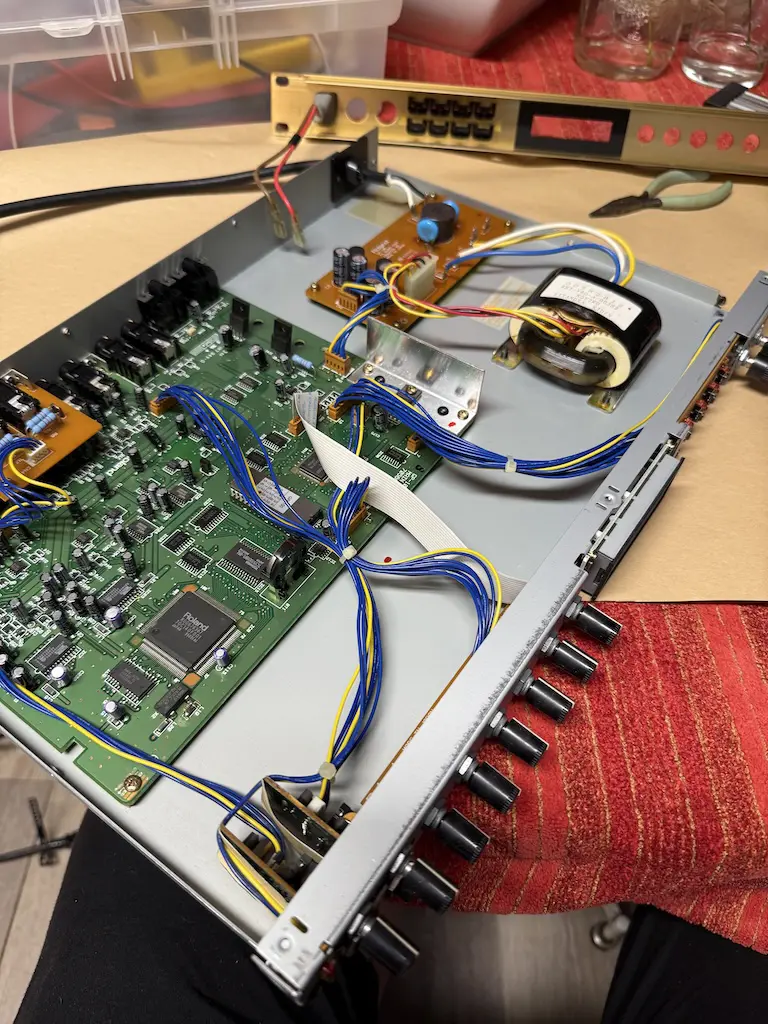
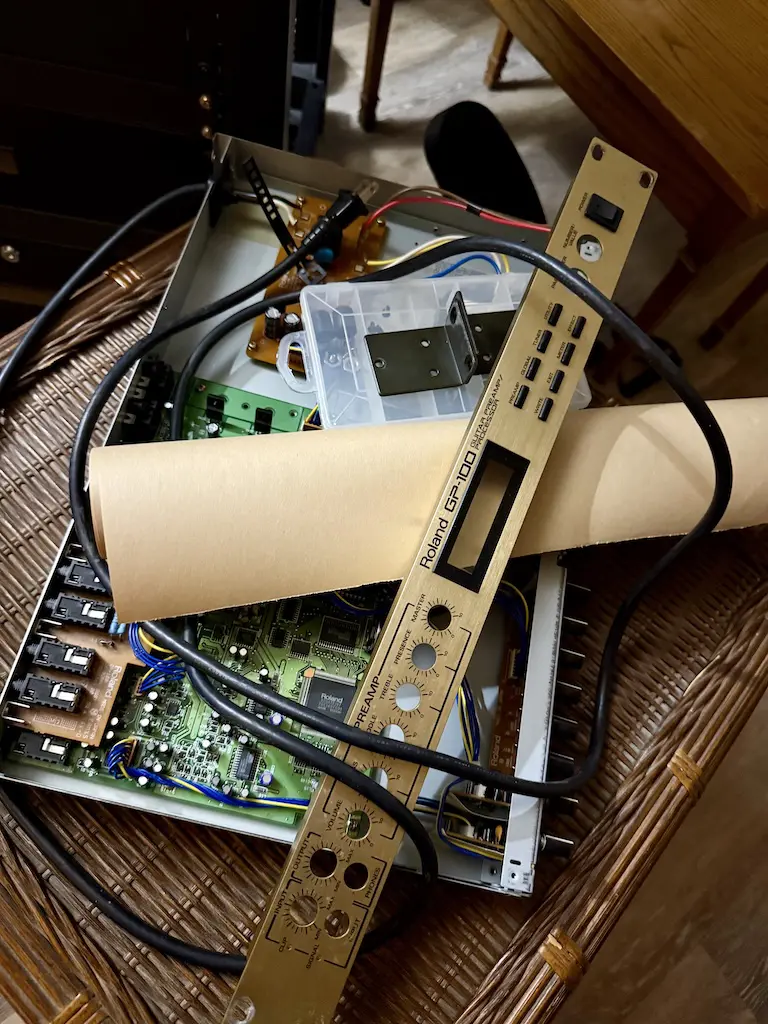
The fix started with taking the GP-100 out of the rack and carefully opening it up. Once the cover and faceplate were removed, the internals were revealed—classic Roland design with a tidy PCB, transformer, and ribbon cables. It’s always a little intimidating seeing vintage gear opened up on the workbench, but also a reminder of how well-built these units are.
Soldering in New Encoders ( EC11B15242AE )
The faulty encoders were desoldered from the board. This required some patience and care to avoid lifting any traces. Once the old components were out, I soldered in brand new replacements ( https://www.ebay.com/itm/404343328520 ). It was a straightforward job, but one where a strong and steady hand made all the difference.
With the new encoders installed, the front panel could go back together. Seeing the gold faceplate cleaned and reattached felt like a small victory.
Back in the Rack
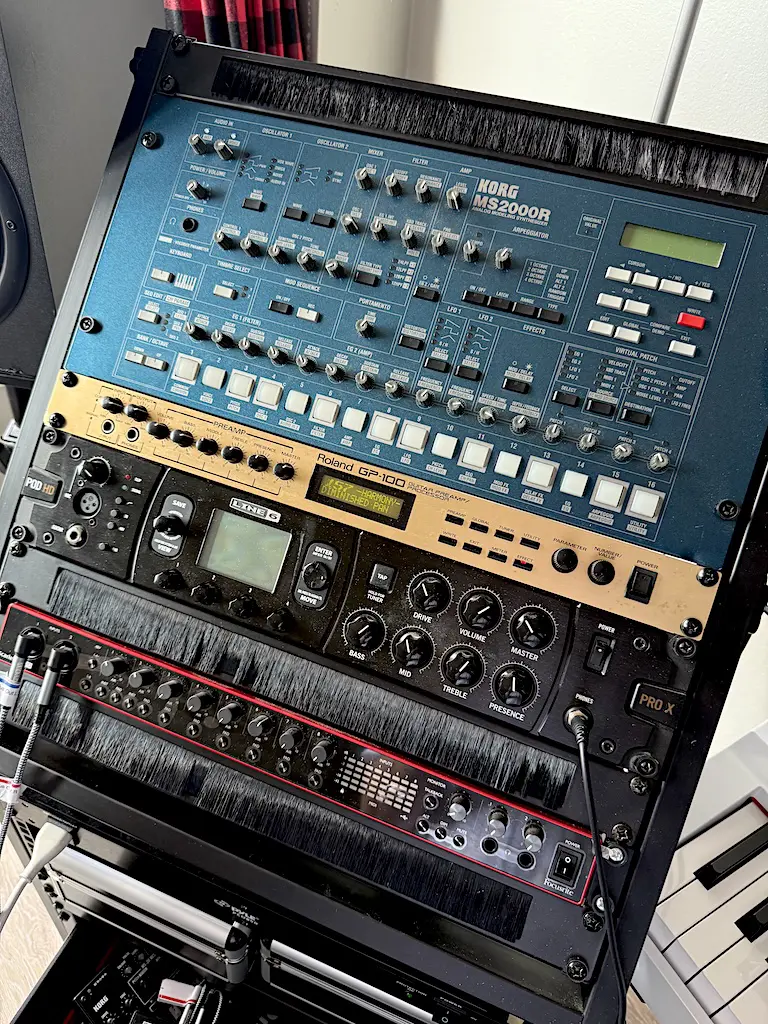
After reassembly, it was time to test. The moment of truth: powering it up, scrolling through programs, and tweaking values. Smooth, precise response—good as new. The GP-100 was ready to reclaim its spot in my rack, right under the Korg MS2000R and next to the other gear that makes up my setup. ( Ok, I actually put the encoder board in backwards the first time and had to disassemble the entire unit again – high speed mode, no problems… )
Why It Matters
There’s satisfaction in repairing gear yourself, especially something as versatile and characterful as the GP-100. Instead of letting it collect dust or replacing it with something newer, I now have a restored piece of history back in service. It’s a reminder that with a little soldering, some patience, and the right parts, old gear can keep inspiring new sounds.